
An Alternative Easter
Not interested in Bible stories about a man returning from the dead? Bunnies and Easter eggs not your thing? Then you might be interested in this…

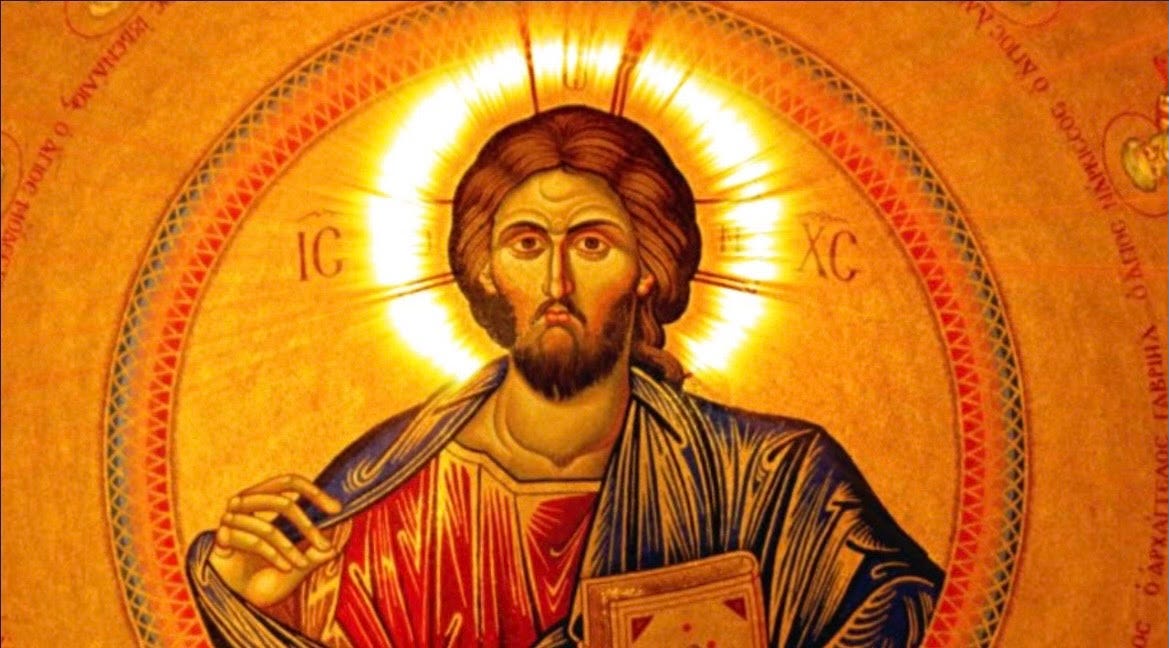
Although Christians may baulk at this idea, some people claim that Easter isn’t about a man called Jesus rising from his tomb - some believe the much-revered story is just that: a story. Others believe it’s metaphorical or symbolic. One of the alternative, esoteric interpretations of Easter draws from astrotheology (viewing religious stories as allegories for celestial events), occult anatomy of the body and modern New Age/Gnostic-style teachings about inner alchemy. It is not the mainstream historical or theological understanding of Christianity, which centres on the literal resurrection of Jesus Christ as the Son of God after his crucifixion. Instead, these views treat the biblical narrative as symbolic of natural cycles, solar phenomena and physiological processes in the human brain and spine. This idea is popular in esoteric communities, though details vary across sources and often blend ancient symbolism with claims about glands and hormones.
In astrotheological interpretations, "Son of God" is a play on "Sun of God.” Jesus represents the sun - the source of light, life and renewal - while his life story allegorises the sun's annual journey through the zodiac and seasons.
The sun "dies" or weakens in winter (shorter days, lower position in the sky), reaches its lowest point around the winter solstice (December 21–25 in the Northern Hemisphere) and is "born again" or begins its ascent toward longer days. This ties into Christmas as a solar rebirth festival overlaid on earlier pagan celebrations.
Easter aligns with the spring (vernal) equinox (around March 21), when day and night are equal and the sun's power visibly increases, bringing renewal to nature. Easter's date is calculated as the first Sunday after the first full moon following the equinox, blending solar and lunar cycles. This timing echoes ancient festivals of resurrection and fertility, where the sun's "triumph" over darkness symbolises rebirth.
The "resurrection" of Jesus is thus seen as the sun rising stronger after its "death" period or, more broadly, the annual victory of light over darkness. Critics of literal Christianity sometimes argue the entire gospel narrative (12 disciples as zodiac signs, crucifixion at "Golgotha" as a symbolic skull/crossroads, etc.) maps onto this solar cycle rather than a unique historical event.
These ideas appear in works by figures like Jordan Maxwell or older comparative mythologists (e.g., echoing Charles François Dupuis) but they remain fringe and contested by historians and biblical scholars.
A core part of the body-focused esoteric view links celestial bodies to brain anatomy:
- The sun (masculine, electric, golden/honey-like energy) represents the pineal gland (often called the "third eye" or "all-seeing eye"). This small, cone-shaped gland in the centre of the brain produces melatonin (regulating sleep-wake cycles) and is mythologised as a spiritual antenna or seat of higher consciousness/illumination. In some accounts, it secretes a "golden" fluid or is tied to DMT-like compounds associated with visionary states. “Peniel”, where Jacob is said to have had a biblical encounter at is frequently reinterpreted as “pineal”.
- The **moon** (feminine, magnetic, milky/white energy) represents the pituitary gland (the "master gland" near the pineal, regulating many hormones). It is sometimes linked to "milk" secretions (e.g., oxytocin, vasopressin) and feminine principles.
Together, the pineal (Joseph/father/sun) and pituitary (Mary/mother/moon) are portrayed as "parents" producing a sacred "oil," "chrism," or "Christ oil" (from Greek ‘christos’ meaning "anointed" or "oiled"). This fluid supposedly originates in the claustrum (a brain structure), flows down the spine (Jacob's ladder, the 33 vertebrae matching Jesus' traditional age at crucifixion), reaches the sacrum/solar plexus ("Bethlehem"), and - if preserved through ascetic practices, diet or lunar timing - can rise back up.
The sun as pineal and moon as pituitary is a common pairing in these teachings, symbolising the union of opposites (male/female, electric/magnetic, gold/milk) that generates divine potential within the body.
In this alternative interpretation, the Easter story is an allegory for an internal physiological/spiritual process rather than (or in addition to) an external event:
- The "birth" of Jesus (the oil/seed) occurs in the solar plexus.
- "Crucifixion" happens at Golgotha ("place of the skull") - the brain region - where the oil is "raised" or "increased in power". (The verb ‘to crucify’ sometimes etymologised creatively can mean ‘to increase’.)
- The oil "dies" or rests for two to three days (tied to the moon's transit through a zodiac sign, roughly the time in one sign) in the "tomb" (cerebellum or lower regions).
- Resurrection is the oil/energy rising back up the spine (like kundalini in yogic traditions), activating the pineal gland, thalamus ("optic thalamus" as a central eye) and ultimately the brain. This is believed to lead to "Christ consciousness," higher awareness, regeneration or enlightenment - turning "matter into spirit" and awakening dormant brain potential.
This process is said to occur monthly, linked to the moon entering one's birth sun sign (zodiac position), when the brain allegedly releases this "psycho-physical" fluid. Preserving it (avoiding "waste" through certain behaviours) allows the "sacred secretion" to ascend and produce effects like clarity, intuition or mystical experience. Some tie it to melatonin/serotonin cycles, DMT (the "spirit molecule" speculated to come from the pineal), or cerebrospinal fluid dynamics, though these are highly interpretive and not supported by mainstream neuroscience.
The effect of the sun on the human brain enters here indirectly in that sunlight influences circadian rhythms via the eyes and pineal (suppressing melatonin in daylight), so solar cycles are seen as mirroring or triggering inner "resurrection" of consciousness/energy.
This general outline fits with the popular esoteric narrative (especially variants inspired by authors like George W. Carey, Manly P. Hall's occult anatomy discussions, or modern YouTube/Instagram teachers) but there are invariably a few nuances or common overstatements. Such as the following:
- Pineal as strictly "sun" and pituitary as "moon": This is symbolic and widespread in the literature, but not universal - some sources flip or blend roles. The pineal is more consistently the "third eye"/spiritual center; the pituitary as the "master" or feminine counterpart.
- Scientific grounding: The pineal does produce melatonin (sensitive to light/dark, hence solar influence) and is linked to sleep/mood. Claims about routine DMT production, "Christ oil" as a literal monthly secretion or spine-rising fluids causing full brain activation lack strong empirical support and often mix real endocrinology with mysticism. The pituitary regulates hormones, but "milk and honey" secretions are poetic. Cerebrospinal fluid circulates, but not as a salvific "oil" in the described alchemical sense.
- Timing and universality: The monthly lunar-zodiac cycle is emphasised in some teachings but varies; not all versions tie it strictly to Easter (which is annual and collective).
- Historical roots: Elements draw from ancient symbolism (e.g., pine cone as pineal in art, sun gods like Horus/Osiris with resurrection motifs, equinox festivals), but the full "sacred secretion" synthesis is largely 19th–20th century esoteric (e.g., blending Christianity with yoga/kundalini and brain anatomy). It is not a direct "alternative explanation" endorsed by early Christians but a reinterpretation.
These ideas appeal as a "kingdom within" (Luke 17:21) framework - emphasising personal transformation over external dogma. They encourage practices like meditation, breathwork and mindful living to "raise" inner energy. However, they represent one layer of symbolic interpretation among many, not a definitive decoding. Mainstream science views the pineal and pituitary as key to endocrine and circadian function, without inherent mystical "resurrection" mechanics.
However you’re spending Easter, make sure it’s a celebration - of hope, newness and rebirth. Whether you believe the resurrection of Jesus is literal, metaphorical or allegorical, there’s no doubt that the day should be a time of joy and wonder. Wishing you a happy one!
This is a supremely brilliant article thank you
😳❤️🔥